
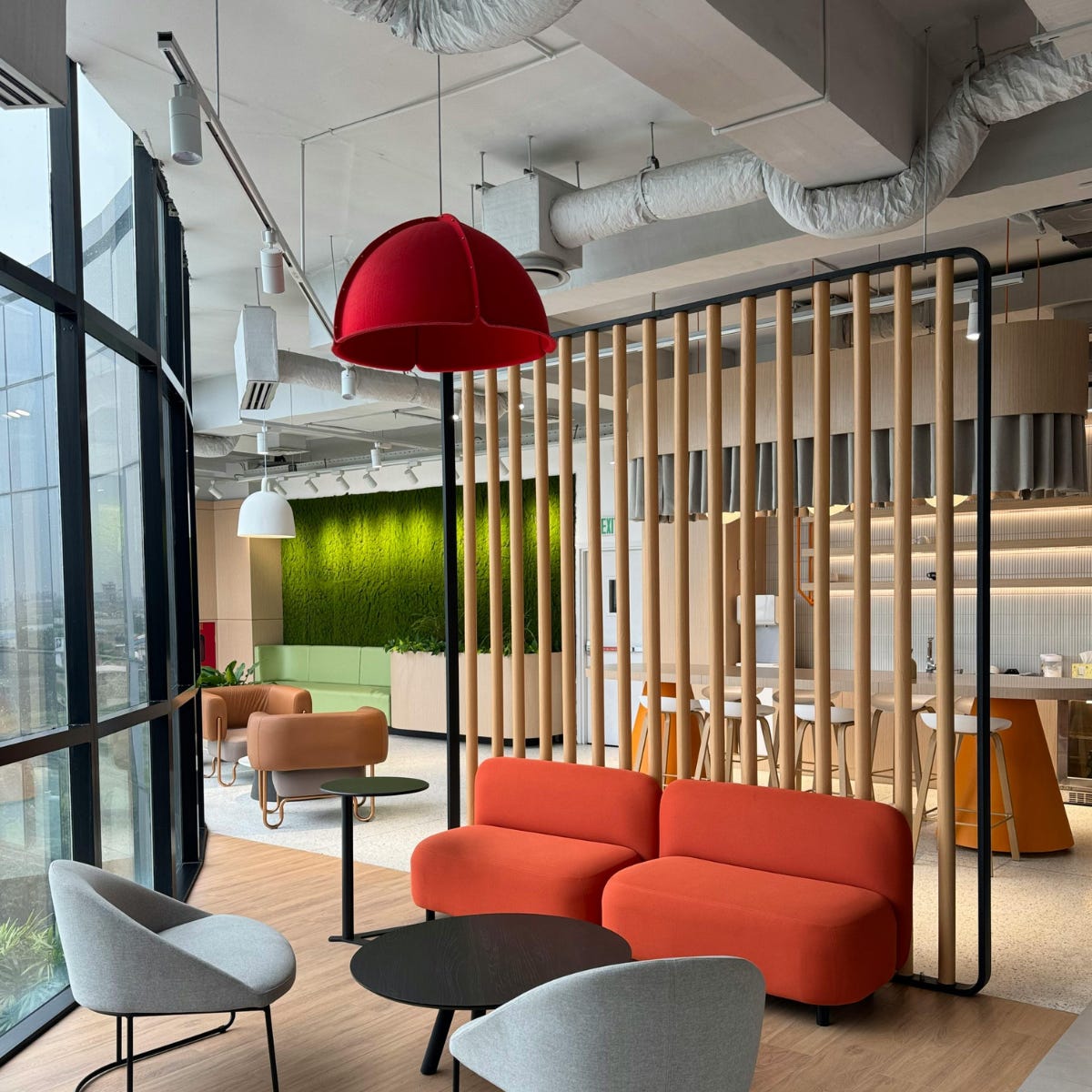
I was fortunate to spend my final years in corporate America working for Steelcase, a global leader in enterprise office furniture. During that time I fully embraced the idea that space matters, particularly for someone like me who toiled for many of my formative years working inside the cubicle farms that dominated the late 90s and early aughts office landscape. If the 2010s and 2020s became about building intentional spaces for employees, the era before that was simply about optimizing the number of employees per square foot. Now, companies are beginning to think about the office the same way Marriott thinks about guest experience, or what Apple wants people to feel when they unbox a new iPhone.
While my time in the office furniture space ended over a decade ago, I still find myself attracted to stories around companies trying to create more modern spaces to attract and retain employees. The pendulum swung hard toward work-from-home during the pandemic, then snapped back the other direction during the return-to-office (RTO) mandates that followed. We’re now in a new hybrid phase with many companies requiring some amount of time in the office, while simultaneously wanting to provide reasons to stick around even longer. The Atlanta office of global accounting giant EY recently invested significant capital into a new, 102,000 square foot campus designed to do just that, complete with sit/stand desks, a library-like room for focus work, and even a market-tested cucumber-mint fragrance to complete the experience. Perhaps it’s proof that mandates alone can’t fill buildings, and that companies are acknowledging they have to meet their employees halfway. Time will tell if this strategy pays off for EY and others following suit.
“Now, companies are beginning to think about the office the same way Marriott thinks about guest experience, or what Apple wants people to feel when unboxing an iPhone.”
This all got us thinking about the broader wellbeing movement, and where employers currently fit into that. Last year I wrote a piece for The Daily Pour suggesting mindful drinking could boost employee wellness and office culture. What was true then and still is now is the second and third places where we spend much of our time have not caught up to wellness trends. Least of all the office, where breakrooms and basecamps routinely still feature sugary sodas and snacks that would be more likely to prepare you for a post-lunch nap than a surge in afternoon productivity. Friday morning yoga at the office may be a great perk, but wellness can’t just be one hour per week. Bars and restaurants haven’t fully caught up either, with many still leaning on boozy menus without enough healthy food or non-alcoholic options to meet modern demand. If the home is truly the only space where we can be as healthy as we want to be, when will the others fully catch-up?
As for what that may look like in practice, for the office it starts with the fridge and the snack bar. Swapping sugary sodas and vending-machine nibbles for functional drinks and foods made with ingredients that are health-neutral at a minimum, sends a clear signal about how a company values its people and their productivity. That means lower sugar, clean labels, and ingredients like prebiotics that support good gut health. Adaptogenic and nootropic drinks from brands like Hiyo and Kin Euphorics can stand in for the afternoon soda, the third cup of coffee, or even a beer at the company happy hour. Bars and restaurants that already understand this can offer a useful lesson here. Their answer isn’t turning the menu into a wellness retreat, it’s simply providing more choice that keeps up with modern tastes. Guests sitting at the same table could be sipping on a low-ABV craft lager or a boozy bourbon, alongside someone with a zero-proof cocktail, while no one has to explain or feel weird about their choices.
Which brings us back to EY’s new office in Atlanta. A market-tested cucumber-mint scent would’ve sounded ridiculous to my cubicle-farm younger self (and to be honest, it still does), but it points to something broader. An RTO mandate may get people back into the office, but the experience is what keeps them engaged, and hopefully maximizes their productivity while they’re in the building.
During the pandemic, the home became our wellbeing headquarters by default. If employers want people to choose the office over the kitchen table, or choose to work for them versus a competitor, they have to create a space where people feel better, not just one where they work harder. Companies that figure that out will be better equipped to recruit the workers of tomorrow, and keep them showing up.